ExamineAI
First page of Secondary Literature in English Characterization Notes Zimbabwe

Secondary Literature in English Characterization Notes Zimbabwe

Study Literature in English notes on Characterization for Secondary. Useful for revision, homework, and exam preparation in Zimbabwe.

A free account is needed to download. Sign in or create one

Subject
Literature in English
Document
Notes
File
PDF, 130 KB

About this notes

This is the Literature in English notes. It is a free notes for revision.

More Literature in English papers

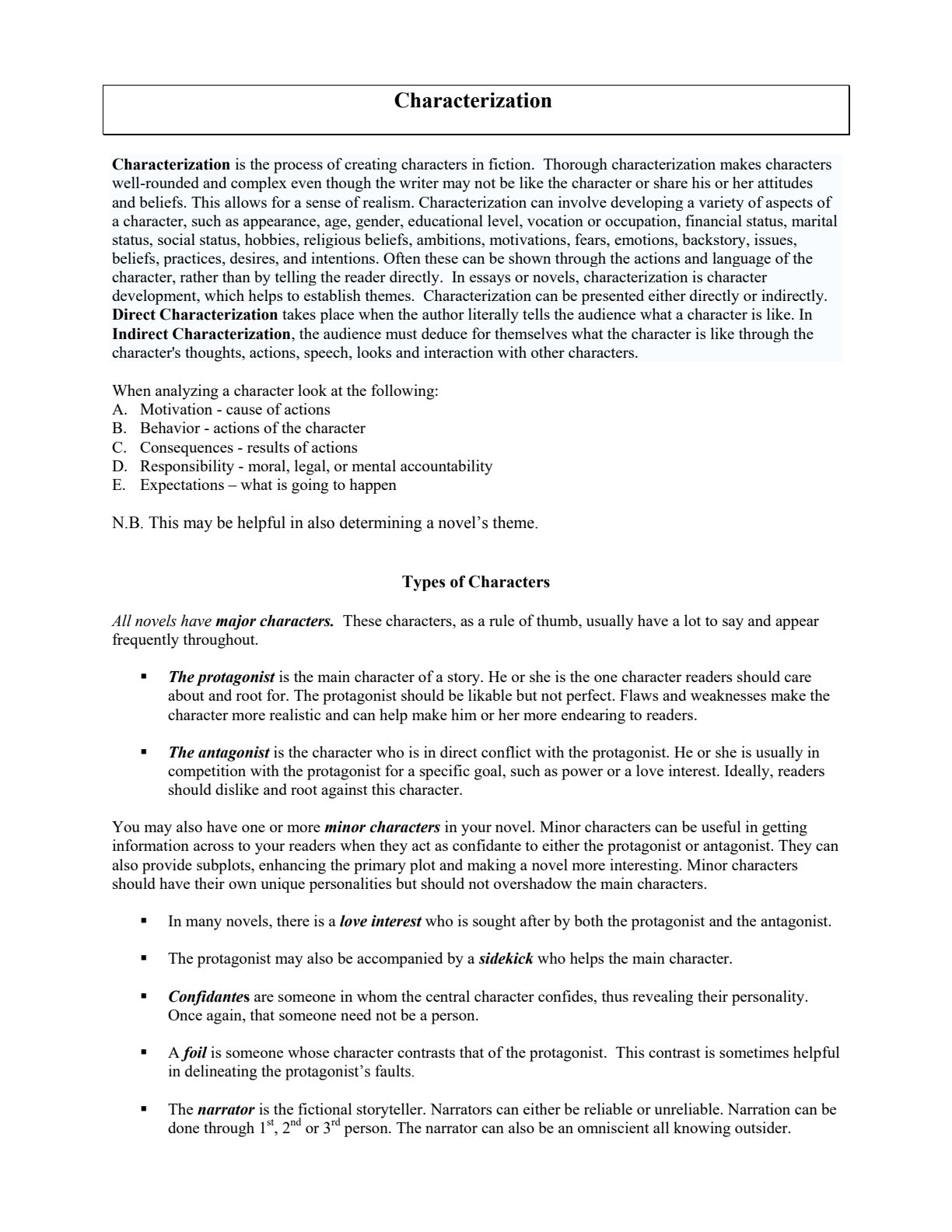
Text from the first page

Characterization

Characterization is the process of creating characters in fiction. Thorough characterization makes characters well-rounded and complex even though the writer may not be like the character or share his or her attitudes and beliefs. This allows for a sense of realism. Characterization can involve developing a variety of aspects of a character, such as appearance, age, gender, educational level, vocation or occupation, financial status, marital status, social status, hobbies, religious beliefs, ambitions, motivations, fears, emotions, backstory, issues, beliefs, practices, desires, and intentions. Often these can be shown through the actions and language of the character, rather than by telling the reader directly. In essays or novels, characterization is character development, which helps to establish themes. Characterization can be presented either directly or indirectly. Direct Characterization takes place when the author literally tells the audience what a character is like. In Indirect Characterization, the audience must deduce for themselves what the character is like through the character's thoughts, actions, speech, looks and interaction with other characters.

When analyzing a character look at the following:
A. Motivation - cause of actions
B. Behavior - actions of the character
C. Consequences - results of actions
D. Responsibility - moral, legal, or mental accountability
E. Expectations - what is going to happen
N.B. This may be helpful in also determining a novel's theme.

Types of Characters
All novels have major characters. These characters, as a rule of thumb, usually have a lot to say and appear frequently throughout.
- The protagonist is the main character of a story. He or she is the one character readers should care about and root for. The protagonist should be likable but not perfect. Flaws and weaknesses make the character more realistic and can help make him or her more endearing to readers.
- The antagonist is the character who is in direct conflict with the protagonist. He or she is usually in competition with the protagonist for a specific goal, such as power or a love interest. Ideally, readers should dislike and root against this character.

You may also have one or more minor characters in your novel. Minor characters can be useful in getting information across to your readers when they act as confidante to either the protagonist or antagonist. They can also provide subplots, enhancing the primary plot and …