ExamineAI
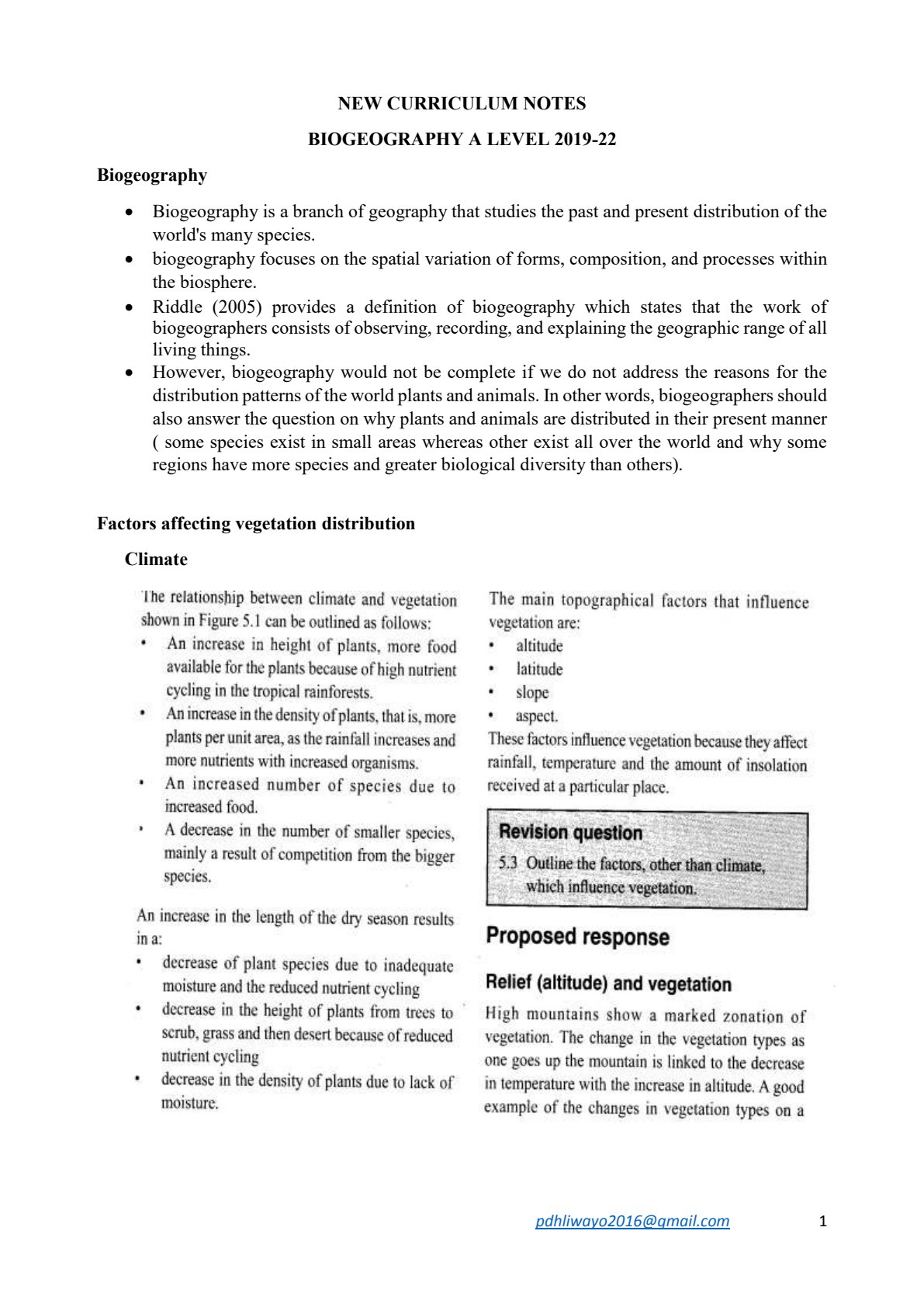
First page of A-Level Geography Biogeography Notes Zimbabwe

A-Level Geography Biogeography Notes Zimbabwe

Study Geography notes on Biogeography for A-Level. Useful for revision, homework, and exam preparation in Zimbabwe.

A free account is needed to download. Sign in or create one

Exam board
ZIMSEC
Subject
Geography
Level
A-Level
Document
Notes
Year
2019 to 2022
File
PDF, 1.5 MB

About this notes

This is the ZIMSEC A-Level Geography notes. It is a free notes for revision.

More Geography A-Level papers

Other years: Geography A-Level

Text from the first page

NEW CURRICULUM NOTES
BIOGEOGRAPHY A LEVEL 2019-22
Biogeography
- Biogeography is a branch of geography that studies the past and present distribution of the world's many species.
- biogeography focuses on the spatial variation of forms, composition, and processes within the biosphere.
- Riddle (2005) provides a definition of biogeography which states that the work of biogeographers consists of observing, recording, and explaining the geographic range of all living things.
- However, biogeography would not be complete if we do not address the reasons for the distribution patterns of the world plants and animals. In other words, biogeographers should also answer the question on why plants and animals are distributed in their present manner (some species exist in small areas whereas other exist all over the world and why some regions have more species and greater biological diversity than others).

Factors affecting vegetation distribution

Climate
The relationship between climate and vegetation shown in Figure 5.1 can be outlined as follows:
- An increase in height of plants, more food available for the plants because of high nutrient cycling in the tropical rainforests.
- An increase in the density of plants, that is, more plants per unit area, as the rainfall increases and more nutrients with increased organisms.
- An increased number of species due to increased food.
- A decrease in the number of smaller species, mainly a result of competition from the bigger species.

An increase in the length of the dry season results in a:
- decrease of plant species due to inadequate moisture and the reduced nutrient cycling
- decrease in the height of plants from trees to scrub, grass and then desert because of reduced nutrient cycling
- decrease in the density of plants due to lack of moisture.

The main topographical factors that influence vegetation are:
- altitude
- latitude
- slope
- aspect.

These factors influence vegetation because they affect rainfall, temperature and the amount of insolation received at a particular place.

Revision question
5.3 Outline the factors, other than climate, which influence vegetation.

Proposed response
Relief (altitude) and vegetation
High mountains show a marked zonation of vegetation. The change in the vegetation types as one goes up the mountain is linked to the decrease in temperature with the increase in altitude. A good example of the changes in vegetation types on a

pdhliwayo2016@qmail.com
1